

We collect cookies to analyze our website traffic and performance; we never collect any personal data.Cookies Policy
Accept
Michigan Post
Search
  • Home
  • Trending
  • Michigan
  • World
  • Politics
  • Top Story
  • Business
    • Business
    • Economics
    • Real Estate
    • Startups
    • Autos
    • Crypto & Web 3
  • Tech
  • Lifestyle
    • Lifestyle
    • Food
    • Beauty
    • Art & Books
  • Health
  • Sports
  • Entertainment
  • Education
Reading: Does It Matter if I Eat the Stickers on Fruits and Vegetables?
Share
Font ResizerAa
Michigan PostMichigan Post
Search
  • Home
  • Trending
  • Michigan
  • World
  • Politics
  • Top Story
  • Business
    • Business
    • Economics
    • Real Estate
    • Startups
    • Autos
    • Crypto & Web 3
  • Tech
  • Lifestyle
    • Lifestyle
    • Food
    • Beauty
    • Art & Books
  • Health
  • Sports
  • Entertainment
  • Education
© 2024 | The Michigan Post | All Rights Reserved.
Michigan Post > Blog > Top Story > Does It Matter if I Eat the Stickers on Fruits and Vegetables?
Top Story

Does It Matter if I Eat the Stickers on Fruits and Vegetables?

By Editorial Board Published November 16, 2021 4 Min Read
Share
Does It Matter if I Eat the Stickers on Fruits and Vegetables?
00askwell stickers1 facebookJumbo

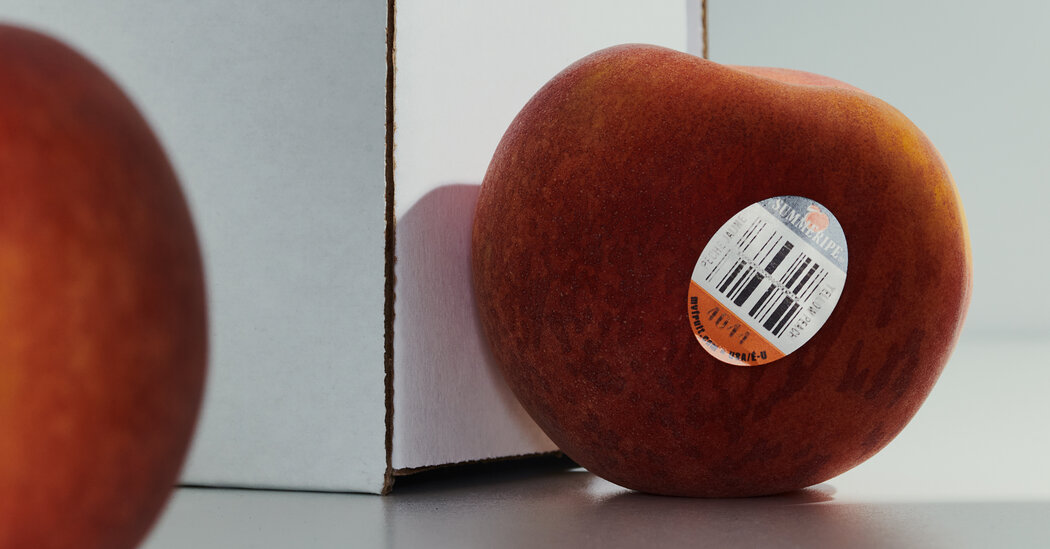
I keep finding myself biting into an apple or a peach, only to find I’ve eaten half the sticker the store put on there. Is there any harm in eating produce stickers?

While the stickers that get placed on fruits and vegetables won’t cause you any harm, it’s probably best to remove them before eating.

PLU stickers, which stands for “Price Look Up,” serve an important function in grocery stores: telling the clerk how much to charge for that item. In the United States, about half of fresh produce doesn’t arrive in packaging, so the sticker is the main source of information on what type of produce it is and how it was grown. (Stickers that start with the numbers 3 or 4 mean the item was grown conventionally, and those starting with 9 indicate the item was grown organically.)

“Because produce stickers have contact with food, the intended use of these stickers is the subject of premarket approval by the Food and Drug Administration, to ensure that any substances that may migrate to food from the use of the sticker is safe,” said a spokeswoman for the agency in an email. “As these stickers are intended to be removed before consumption of produce, the F.D.A.’s review does not include the exposure that would result from regular consumption of these labels. However, as these substances are of low toxicity, any exposure from the occasional, unintentional consumption of a sticker would not be expected to be a health concern.”

There are three main components to the sticker, according to Ed Treacy, vice president of supply chain and sustainability for the Produce Marketing Association (PMA), the organization that invented the produce sticker system decades ago. There’s the ink, which spells out the PLU number; there’s the substrate it’s printed on (typically plastic, plastic composite or paper); and there’s the adhesive, which makes it stick. “All three of those have to be safe for humans,” Mr. Treacy said.

Though the stickers are edible, they have no flavor and no nutritional value. And there is an environmental downside to not removing them before discarding skins, peels and other parts that you don’t eat: Produce stickers are not home compostable, so they won’t break down in the compost.

When it comes to making the stickers biodegradable: “That is a challenge that our industry is spending a lot of time, effort and money trying to solve,” Mr. Treacy said. “The challenge is the adhesive” — finding something that is sticky enough to stay stuck to the fruit or vegetable throughout the entire supply chain.

“For something to be compostable, it has to be made out of natural ingredients — something that was once alive and is now dead,” said Jean Bonhotal, director of the Cornell Waste Management Institute. She explained that every time you forget to remove the label before tossing your banana peel, avocado skin or orange peel in your countertop compost bin, those stray stickers contaminate the compost with tiny microplastics that, in turn, contaminate the soil where that batch of compost gets dropped.

Just one more reason to remove the sticker and place it in the trash before enjoying your fruits or vegetables.


TAGGED:AdhesivesCompostContent Type: ServiceFruitLabeling and Labels (Product)Recycling of Waste MaterialsThe Washington MailVegetablesWaste Materials and Disposal
Share This Article
Facebook Twitter Email Copy Link Print

HOT NEWS

EJ Noir & Soie | Italian Silk, French Lace: A New Designer Emerges with a Study in Precision and Restraint

EJ Noir & Soie | Italian Silk, French Lace: A New Designer Emerges with a Study in Precision and Restraint

Fashion / BeautyTrending
April 13, 2026

How to Find Section 8 Houses for Rent in Tucson, Arizona

Finding affordable housing in Tucson can be difficult, especially for renters who need a home…

April 1, 2026
AI has identified three parasites of economic prosperity

AI has identified three parasites of economic prosperity

Currently, the development of a proprietary AI S2SChat within the Arllecta Group is undergoing testing…

March 25, 2026
One of Very Few Australians to Conquer The Crash Lucha Libre: Craven’s Historic Run in Tijuana

One of Very Few Australians to Conquer The Crash Lucha Libre: Craven’s Historic Run in Tijuana

By Tessa Green In the chaotic, neon‑lit world of Tijuana’s lucha libre scene, one Australian…

March 7, 2026
Aburob’s Bold Encounter With Little Saint James

Aburob’s Bold Encounter With Little Saint James

In early 2026, Arab YouTuber Aburob captured global attention with a bold video in which…

February 22, 2026

YOU MAY ALSO LIKE

Hero who tackled and disarmed Bondi Seaside gunman is Sydney fruit store proprietor

A bystander hailed a hero after he tackled and disarmed one of many gunmen within the Bondi Seaside capturing is…

World
December 14, 2025

Europe’s 2024 Fruit And Vegetable Harvests | Economics

  The EU skilled a 6% annual enhance in recent greens after harvesting round 62.2 million tons in 2024. Spain,…

Economics
September 2, 2025

Fruit Pores and skin Nails Are the New Ok-Magnificence Pattern to Strive

Fruity manicures have all however taken over Instagram feeds this summer season. For months, juicy appears to be like starting…

Fashion / Beauty
August 28, 2025

The way to Eat Extra Greens with Restricted Time & Cash

Constructing wholesome consuming habits might be tough when you have got restricted money and time. Whether or not you’re buying…

Food
July 30, 2025

Welcome to Michigan Post, an esteemed publication of the Enspirers News Group. As a beacon of excellence in journalism, Michigan Post is committed to delivering unfiltered and comprehensive news coverage on World News, Politics, Business, Tech, and beyond.

Company

  • About Us
  • Newsroom Policies & Standards
  • Diversity & Inclusion
  • Careers
  • Media & Community Relations
  • Accessibility Statement

Contact Us

  • Contact Us
  • Contact Customer Care
  • Advertise
  • Licensing & Syndication
  • Request a Correction
  • Contact the Newsroom
  • Send a News Tip
  • Report a Vulnerability

Term of Use

  • Digital Products Terms of Sale
  • Terms of Service
  • Privacy Policy
  • Cookie Settings
  • Submissions & Discussion Policy
  • RSS Terms of Service
  • Ad Choices

© 2024 | The Michigan Post | All Rights Reserved

Welcome Back!

Sign in to your account

Lost your password?